A City Rewritten
On November 4, 2025, New York City did something it had not done in more than a century: elect a mayor under 35.
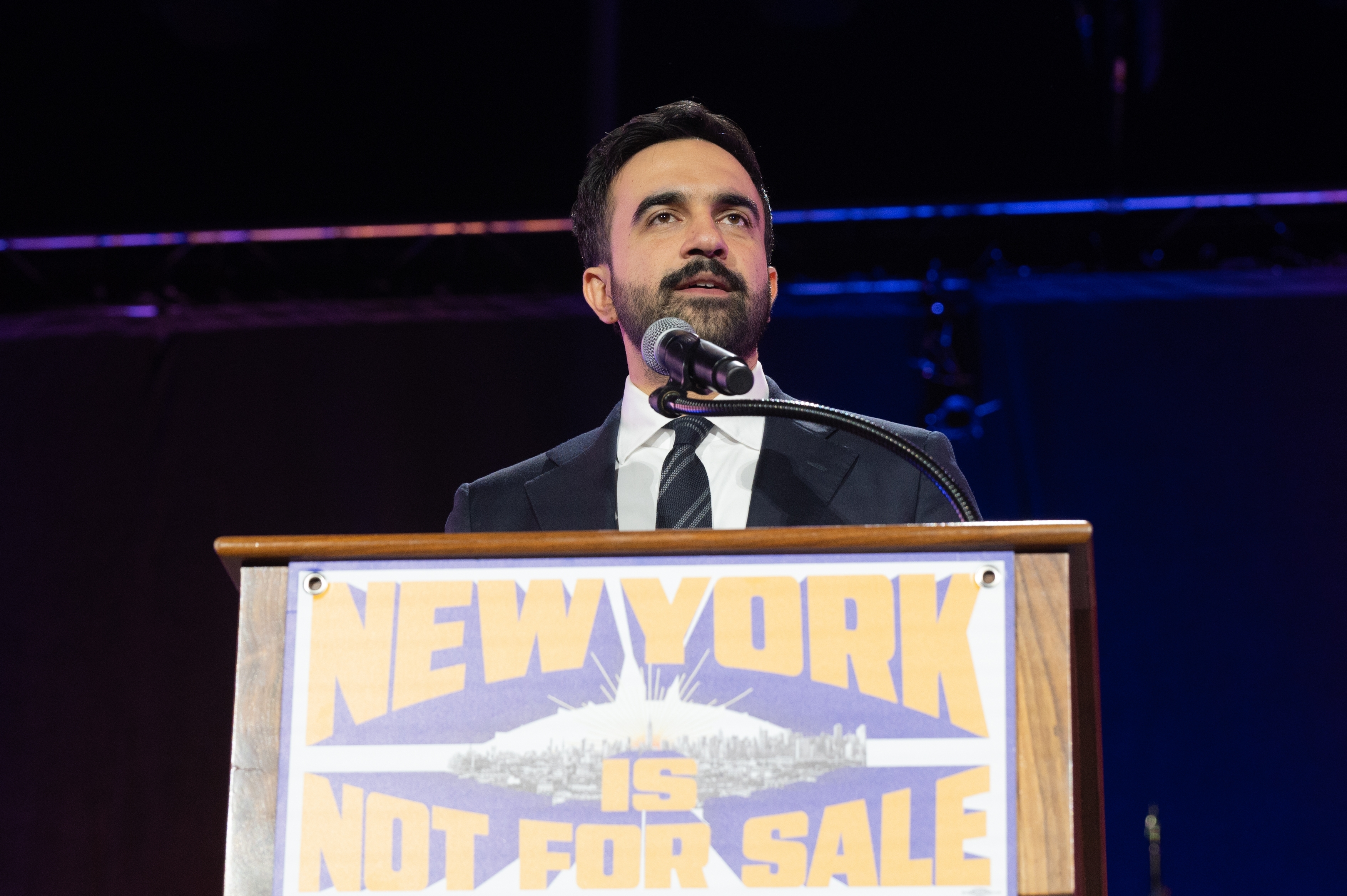
Zohran Mamdani, son of the Ugandan scholar Mahmood Mamdani and filmmaker Mira Nair, defeated former governor Andrew Cuomo in what could be called the most ideologically charged race since the Koch era. His win carried the highest voter turnout since 1969, a surge propelled not by political machinery, but by digital charisma.
With 8.8 million followers on Instagram and a campaign that blurred the lines between politics and performance, Mamdani was omnipresent: at Halloween parties urging club-goers to vote, in interviews with influencers, and in videos that spread from Queens to Kenya. In the days following his victory, one phrase trended worldwide: “Our Mayor, even if we can’t vote.”
A Campaign of Presence
Mamdani’s rise was not built on a decades-long record of policy achievement, but on the promise of one. His rallies felt less like stump speeches and more like collective affirmations, a blend of grassroots fervor and generational discontent.
He ran as a Muslim democratic socialist, pledging to make buses free, freeze rents, expand childcare, and raise corporate taxes. But his greatest skill was not his policy detail, it was his communication.
He knew how to capture an audience, how to move the language of governance into the emotional register of culture. His campaign was described by The Guardian as a “mould-breaking field operation,” where listening was an important part of Zohran Mamdani’s work. He bridged the digital and the physical: thousands knocking on doors, millions tapping on screens.
“Turn the Volume Up”
When victory came, Mamdani’s first words were not about infrastructure or budgets, they were about confrontation.
“Since I know you’re watching, Mr. Trump,” he said, smiling into the camera, “turn the volume up.”
That single line set the tone for what may become one of the most “acrimonious relationships” between a mayor and a president in recent history. Trump responded within hours, warning on Truth Social that Mamdani represented a “very dangerous direction for America.” But Mamdani doubled down, declaring in his victory speech that “if there is any way to terrify a despot, it is by dismantling the very conditions that allowed him to accumulate power.”
The Guardian noted that he may also have been alluding to FIFA and the upcoming 2026 World Cup: a global event expected to reshape the city’s infrastructure and politics.
Law, Order, and the Backlash
Not everyone celebrated his win. According to CNN, U.S. Immigration and Customs Enforcement (ICE) used Mamdani’s election to recruit disillusioned NYPD officers, highlighting his 2020 statements calling the department “racist, anti-queer, and a danger to society.”
ICE’s recruitment posters contrasted Trump’s pro-police image with Mamdani’s defund rhetoric, framing the new mayor as an enemy of law enforcement. The move deepened an already visible rift between progressive New York and its federal institutions. It also forced a question that will haunt his first months in office: can a mayor who once called to defund the police now command their cooperation?
Promise Without Precedent
Mamdani’s win is extraordinary precisely because it rests on promise, not pedigree. He has no record of sweeping reforms, no legacy of executive office, only an electric connection to a generation that feels unheard. To some, that’s what makes him dangerous. To others, that’s what makes him necessary.
His vision of New York is unapologetically idealistic: a city of social housing, free transit, cultural pluralism, and reimagined justice. But New York is also a city of institutions, unions, and billion-dollar contracts, and it does not bend easily to ideals.
The Smear That Failed
In the final stretch of New York’s most turbulent election in decades, Mamdani’s opponents unleashed a coordinated smear campaign: leaked videos, anonymous ads, and fabricated stories branding him “anti-police” and “anti-American.” The attacks, amplified by billionaires, dark-money PACs and partisan media, were meant to remind voters of his 2020 call to defund the NYPD. Instead, they only reminded New Yorkers why he ran: against fear politics and entrenched power. Each scandal collapsed under its own exaggeration, transforming what was meant to discredit him into proof that a system built on intimidation was finally cracking.
Rama Duwaji: The Unspoken Politics of Presence
Behind the defiant energy of Zohran Mamdani’s campaign stands Rama Duwaji: not a First Lady in the traditional sense, but a political presence in her own right. A Syrian-American artist whose illustrations often explore displacement, identity, and resistance, Duwaji embodies the same intersectional politics that propelled her husband’s rise. Their marriage, announced just months before the election, became a subtle political statement: a union of two diasporas rewriting what representation looks like in America’s most scrutinized city. While Mamdani faced accusations of radicalism, Duwaji’s quiet strength, art, restraint, and refusal to play the ornamental role, grounded the movement in something deeply human. In a race defined by noise, she was the silent assertion that identity itself can be political.
Utopic Dream or Possible Outcome
Mamdani’s dream comes off as classic municipal socialism: expand entitlements, discipline markets, and trust state capacity to deliver. The trouble is the math and the mechanism. New York’s welfare ambitions already strain a mobile tax base. Higher corporate and high-earner burdens risk accelerating capital and talent flight, eroding the very revenues his programs need. “Free” buses and rent freezes aren’t free, they shift costs into opaque MTA deficits, deferred maintenance, and smaller private rental supply, which historically pushes up scarcity and lowers quality. Social housing promises often gloss over construction timelines, procurement bloat, and public-sector cost premiums. “Reimagined safety” can become a euphemism for slower response times if policing headcount, morale, and legitimacy deteriorate. Without hard trade-offs like spending caps, rigorous means-testing, independent audits, and willingness to say “no”, the project risks delivering symbolism, not solvency.
A Global Symbol
Whether one sees him as a populist or a visionary, Mamdani’s victory has already transcended geography. From Paris to Nairobi, from Montreal to Mumbai, his rise has been read as proof that youth and conviction can still defeat cynicism.
He is the first Muslim mayor of New York, the youngest in its modern history, and perhaps the most divisive. In a city that once gave rise to Donald Trump, Zohran Mamdani now stands as its mirror opposite: not a businessman promising order, but an activist promising reinvention. History will decide which promise endures.